
Three Common Mistakes and Drawbacks of Traditional Room Drying
By
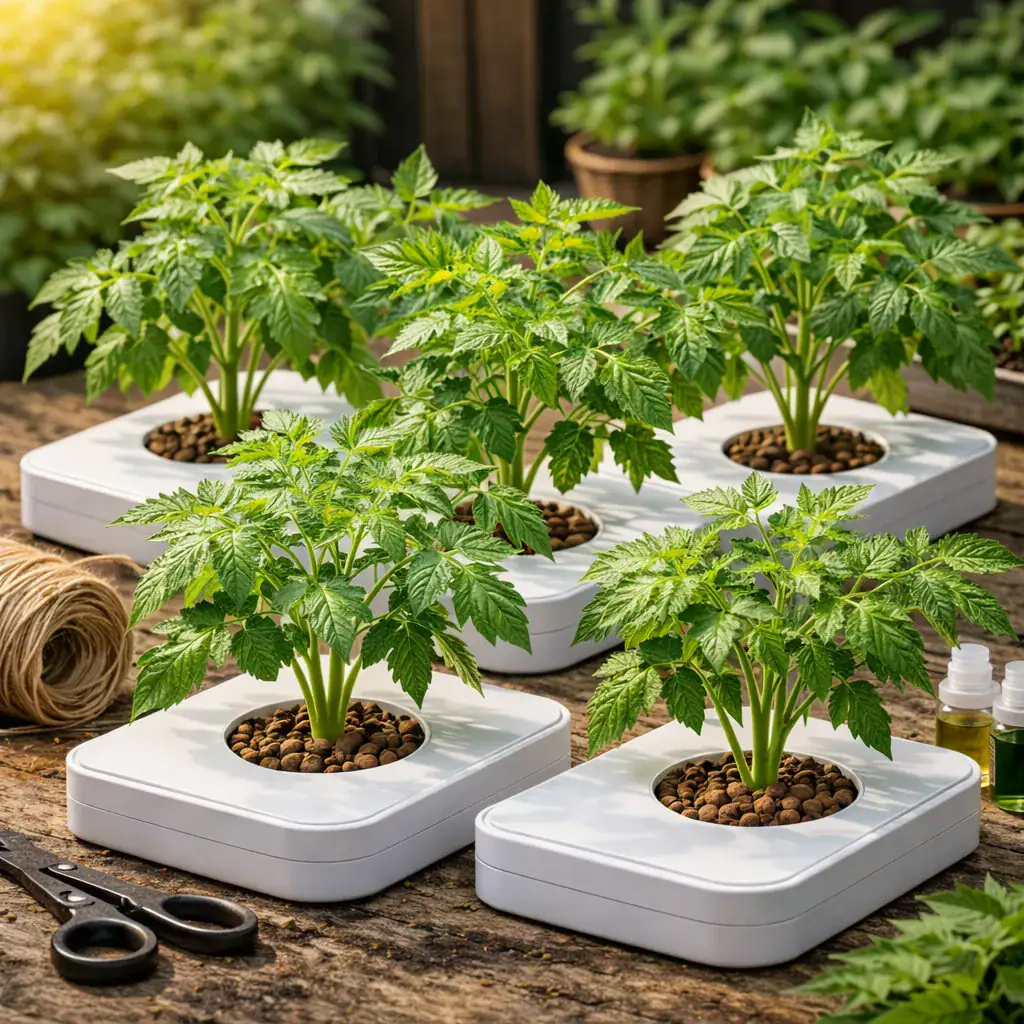
Green flower plants growing in hydroponic systems on a wooden table, with gardening tools and supp.
Room drying is one of the most widely used post-harvest methods in processing. At first glance, drying an entire harvest in a controlled room seems efficient and scalable. However, many quality losses attributed to “strain issues” or “curing problems” actually originate during the room drying stage.
In practice, traditional room drying frequently introduces inconsistent airflow, uneven moisture gradients, and uncontrolled terpene loss—leading to measurable reductions in final flower quality.
This article outlines the three most common mistakes in room drying, explains their underlying causes, and clarifies why they often result in avoidable quality degradation.

Mistake 1: Assuming “Average” Temperature and Humidity Equals Uniform Drying

The Misconception

Many drying rooms are operated based on single-point environmental readings (e.g., one hygrometer showing 60% RH at 18°C). The assumption is that if the room average is correct, the entire batch dries evenly.

The Reality

In real drying rooms:

  • Temperature and humidity vary significantly by height and location
  • Air stagnation zones form behind racks and dense canopies
  • Buds closer to vents dry faster than those in interior zones

This leads to uneven moisture gradients, where some flowers overdry while others retain excessive internal moisture.

Consequences

  • Inconsistent water activity (aw) across the batch
  • Increased risk of microbial growth in slower-drying zones
  • Uneven curing behavior and flavor inconsistency

Mistake #2: Overreliance on High Airflow to “Speed Things Up”

The Misconception

To reduce drying time and mold risk, operators often increase fan speed or airflow volume—believing faster drying is inherently safer.

The Reality

Excessive airflow causes:

  • Rapid surface dehydration (“case hardening”)
  • Premature closure of plant tissue pathways
  • Trapping of internal moisture while the exterior appears dry

This creates a false sense of readiness, where buds feel dry externally but remain unstable internally.

Consequences

  • Harsh smoke and muted aroma
  • Increased terpene volatilization due to high air velocity
  • Higher likelihood of ammonia or grassy notes during curing

Terpenes are highly volatile compounds, and studies show that rapid drying under high airflow significantly increases terpene loss, regardless of cultivar (Brikenstein et al., 2024).

Mistake #3: Treating All Batches as Identical

The Misconception

Room drying workflows are often standardized under a “one-size-fits-all” model—regardless of:

  • Bud size and density
  • Cultivar morphology
  • Harvest moisture content
  • Hanging density and spacing

The Reality

Different cultivars and harvest conditions require different drying kinetics. Dense colas and thick stems release moisture far more slowly than airy flowers, even under identical room conditions.

Ignoring these differences leads to batch-to-batch variability, even when the environment appears controlled.

Consequences

  • Inconsistent flavor expression between harvests
  • Variable shelf stability
  • Higher rejection or reprocessing rates

According to the American Herbal Pharmacopoeia, post-harvest inconsistency is one of the primary causes of quality variation in inflorescences, often exceeding variability introduced during cultivation.

Impact on Flavor, Aroma, and Market Value

When room drying is mismanaged—or structurally constrained—common outcomes include:

QUALITY ATTRIBUTE

IMPACT OF POOR ROOM DRYING

Terpene content

Reduced, inconsistent

Aroma clarity

Muted or grassy

Burn quality

Harsh or uneven

Visual appeal

Brittleness or collapse

Batch consistency

Highly variable

Industry data consistently links these issues to post-harvest handling rather than genetics or nutrients.


Conclusion

Avoiding these common room drying mistakes is the first step to preserving terpene content, ensuring consistent quality, and maximizing your harvest's market value. For premium, controlled room drying solutions that eliminate these errors, explore Flavorwise's smart drying cabinets designed for consistent, terpene-rich harvests.


References

  1. Bernstein, N., Gorelick, J., Zerahia, R. (2019). Impact of drying and curing conditions on the quality of medical flower buds.
    Frontiers in Plant Science, 10:1136.
    https://www.frontiersin.org/articles/10.3389/fpls.2019.01136
  2. Brikenstein, N., Bernstein, N., et al. (2024). Optimization of post-harvest processing techniques for medical flower buds.
    Plants, 13(6), 889.
    https://doi.org/10.3390/plants13060889
  3. Chandra, S., Lata, H., Khan, I. (2017). Botany and Biotechnology of Flowering Plants. Springer.
  4. American Herbal Pharmacopoeia (2014). Plant Inflorescence: Standards of Identity, Analysis, and Quality Control.

Leave a Reply

What did you take away?

Share a question or your experience with the community.

Your email address will not be published. Required fields are marked *