Dry Trim vs. Wet Trim: How Trimming Method Impacts Flower Buds Flavor
By
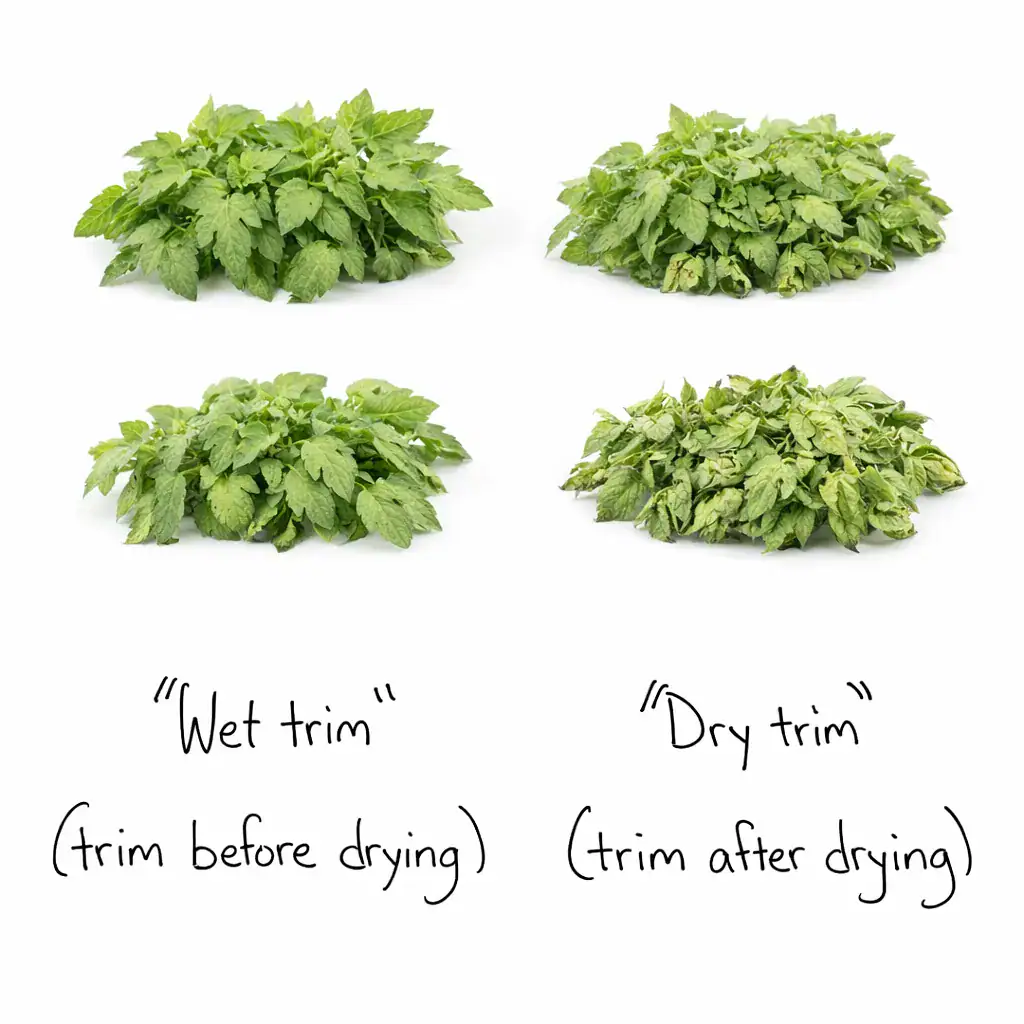
Fresh green mint herbs showing wet and dry trim stages for culinary use and flavor enhancement.

When it comes to producing high-quality flower buds, post-harvest handling is just as important as cultivation itself. Among growers, one of the most debated topics is whether dry trimming or wet trimming leads to better aroma and flavor.

While both methods are widely used, recent research and industry experience suggest that trimming technique can significantly influence terpene retention, and therefore the final sensory quality of buds.

This article examines the real impact of dry trim vs. wet trim on flower buds flavor, combining peer-reviewed research with established post-harvest best practices.

What Determines Flower Buds Flavor?

Flower Buds flavor and aroma are primarily driven by terpenes—volatile aromatic compounds responsible for citrus, pine, floral, fuel, and earthy notes.

Key characteristics of terpenes:

  • Highly volatile
  • Sensitive to heat, airflow, oxygen, and physical handling
  • Most vulnerable during drying, trimming, and curing

Because trimming directly affects air exposure and mechanical stress, the timing of trimming plays a critical role in terpene preservation.

What Is Wet Trimming?

Wet trimming refers to removing sugar leaves immediately after harvest, while the plant material still contains high moisture.

Advantages

  • Easier and faster to trim
  • Reduced risk of trapped moisture in dense buds
  • Common in large-scale or high-throughput operations

Impact on Flavor

Multiple industry analyses indicate that wet trimming:

  • Exposes trichomes and terpene-rich surfaces earlier
  • Accelerates drying
  • Increases airflow over fresh resin glands

Because terpenes evaporate easily, faster drying combined with early exposure may increase terpene loss, particularly in warm or low-humidity environments.

What Is Dry Trimming?

Dry trimming involves hanging whole branches or untrimmed buds to dry first, followed by trimming once moisture levels stabilize.

Advantages

  • Slower, more controlled drying
  • Reduced early terpene volatilization
  • Natural “leaf barrier” protects resin glands during drying

Scientific Evidence

A 2024 peer-reviewed study published in Plants (MDPI) evaluated different trimming strategies and found:

“Post-drying trimming resulted in the highest terpene content, while pre-drying trimming resulted in higher cannabinoid concentrations.”
— Brikenstein et al., 2024, Plants

This finding supports long-standing grower observations that dry trimming tends to preserve aroma and flavor more effectively.

Why Dry Trimming Preserves More Flavor

From a chemical and physical standpoint, dry trimming offers several terpene-protective advantages:

  • Slower moisture loss reduces terpene evaporation
  • Leaves act as a buffer against direct airflow
  • Less mechanical handling during the most fragile stage
  • Lower risk of “hay” or grassy aroma development

Industry guidance from HydroBuilder, Emerald Harvest, and GreenBroz consistently emphasizes that slow drying combined with dry trimming supports terpene retention and smoother flavor expression.

Dry Trim vs. Wet Trim: Flavor Comparison

FactorWet TrimDry TrimDrying speedFasterSlowerTerpene retentionLower risk toleranceHigher preservationAroma complexityCan be reducedMore pronouncedTrimming efficiencyEasierMore labor-intensiveBest use caseVolume & speedFlavor & quality

Conclusion

Current scientific evidence and industry practice suggest that:

  • Dry trimming generally preserves more terpenes, leading to richer aroma and flavor
  • Wet trimming may accelerate terpene loss due to early exposure and faster drying
  • The best results come from slow, controlled drying followed by careful trimming

For growers focused on premium flower quality, dry trimming remains the gold standard for flavor preservation.

References

  1. Brikenstein, N., Bernstein, N., et al. (2024). Optimization of trimming techniques for enhancing phytochemical and terpene content in harvested flower inflorescences. Plants, 13(6), 889. https://doi.org/10.3390/plants13060889
  2. PubMed Central. Optimization of trimming techniques for harvested flower inflorescences. https://pmc.ncbi.nlm.nih.gov/articles/PMC11249524/
  3. HydroBuilder Learning Center. Wet Trim vs Dry Trim. https://learn.hydrobuilder.com/wet-trim-vs-dry-trim/
  4. Emerald Harvest. Post-Harvest Care: Trimming and Drying Flower Buds. https://emeraldharvest.co/post-harvest-care-trimming-and-drying/
  5. GreenBroz Inc. Wet Trim vs Dry Trim: Complete Guide. https://www.greenbroz.com/blog/wet-trim-vs-dry-trim-complete-guide-to-trimming

Leave a Reply

What did you take away?

Share a question or your experience with the community.

Your email address will not be published. Required fields are marked *