
Los Angeles Dispensary Deals: Cheap Flower vs Proper Post-Harvest Quality
Key Takeaways
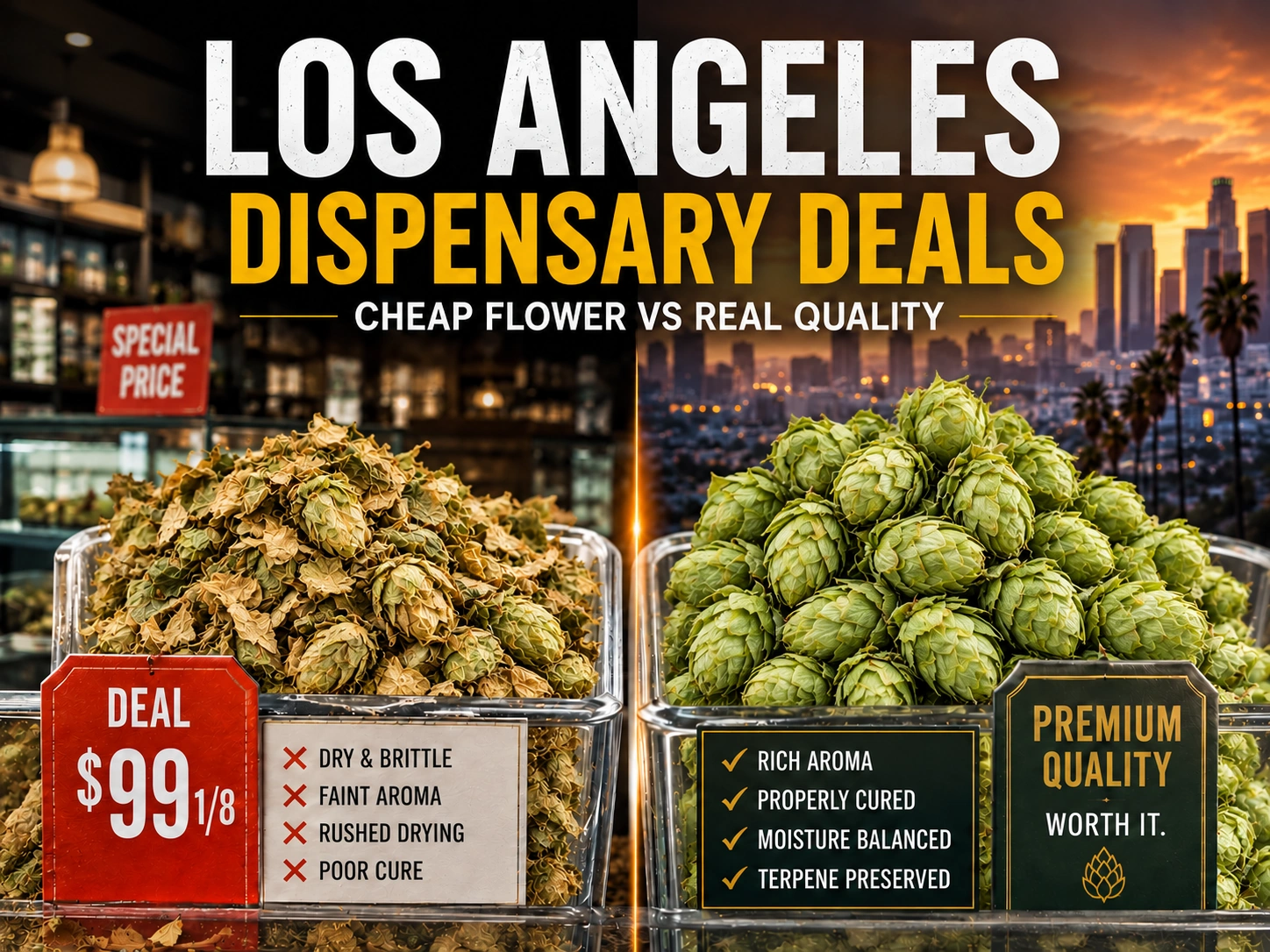
- A low price is useful only when the flower still has good aroma, balanced moisture, clean appearance, and a traceable package date.
- Buy only from a licensed Los Angeles retailer or delivery service and check the California label before judging the deal.
- Hay-like odor, brittle texture, weak aroma, and uneven moisture can point to rushed drying or poor storage.
- Home growers gain more control over final quality only when cultivation is legal and the drying, curing, and storage stages are managed carefully.
Common Los Angeles Dispensary Deals—and What They Really Mean
Los Angeles shoppers may encounter first-purchase discounts, loyalty rewards, daily category promotions, delivery specials, bundle pricing, and clearance markdowns. None of these formats automatically means the flower is poor. They simply tell you why the price changed. They do not tell you what happened during drying, curing, packaging, or storage.
Start by separating the promotion from the product. A first-order discount may apply to a fresh premium batch. A clearance price may be attached to older inventory. A bundle may be excellent value, or it may encourage you to buy more of a batch you have not evaluated yet.
| Deal Type | Possible Benefit | What to Check |
|---|---|---|
| First-purchase discount | Lower entry price at a licensed retailer | Final price, eligible brands, package date, and exclusions |
| Daily or category special | Good value on selected flower | Whether the discount applies to fresh inventory or selected older batches |
| Loyalty reward | Savings for repeat customers | Points value, redemption limits, and whether prices were already marked up |
| Bundle or volume offer | Lower price per unit | Whether you have inspected the batch before committing to more |
| Clearance markdown | Potentially steep savings | Packaging date, seal condition, aroma, dryness, and storage history |
Ask why the batch is discounted, not just how much comes off the receipt.
Cheap Flower vs Good-Value Flower
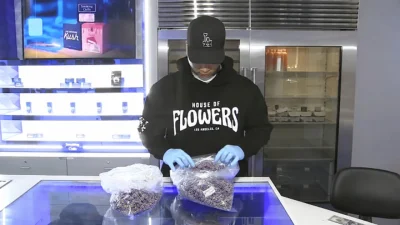
Cheap flower and good-value flower are not the same thing. Cheap flower only has a low price. Good-value flower delivers acceptable freshness, aroma, texture, cleanliness, and traceability at a price that makes sense.
Price can fall for harmless reasons: a retailer may be running a promotion, introducing a brand, rotating stock, or rewarding loyal customers. It can also fall because the batch is older, dry, weak-smelling, visually inconsistent, or simply unpopular. That is why the flower itself has to win the inspection.
| Quality Signal | Good-Value Flower | Possible Low-Quality Discount |
|---|---|---|
| Aroma | Distinct and recognizable after opening | Faint, grassy, dusty, or nearly absent |
| Texture | Dry enough to handle but not instantly crumbling | Brittle outside, powdery, or oddly damp in spots |
| Appearance | Clean, intact, and reasonably consistent | Excessive shake, crushed pieces, discoloration, or suspicious growth |
| Freshness information | Readable package and batch details | Old package date, damaged label, or missing traceability information |
| Moisture balance | Even feel across the flower | Dry shell with a noticeably softer or damper center |
A beautiful photo and a high THC number do not replace these checks. Post-harvest handling shapes the final sensory experience, and two batches of similar genetics can finish very differently when drying and storage conditions differ.
Check the Retailer and California Label First
Before evaluating any Los Angeles flower delivery or storefront promotion, confirm that the seller is authorized. The Los Angeles city regulator lists licensed retailers and delivery services. California also maintains a state licensing search tool that is updated regularly.
This matters because products sold through California’s regulated specialty-product market must move through required testing and traceability systems. The California DCC testing program covers cannabinoids, terpenes, pesticides, heavy metals, microbial impurities, mycotoxins, moisture content, water activity, and other categories before a batch can be sold.
Next, read the label. The City of Los Angeles guide to reading a Regulated product label explains that regulated product information includes a packaging date, unique identifier, and batch or production information. Those details do not guarantee a perfect cure, but they give you a much stronger starting point than an untraceable product.
Use this simple order:
- Verify the retailer or delivery license.
- Check the package date and batch information.
- Confirm that the seal is intact.
- Compare the net weight and final price after taxes and fees.
- Evaluate aroma, texture, and appearance after legal purchase and opening.
Signs Flower May Have Dried Too Quickly
Drying is not just about removing water. It is about controlling how moisture moves from the inside of the flower to the surrounding air. A peer-reviewed review of post-harvest operations in a specific flower crop describes drying, curing, and storage as major operations that can change final consistency and chemical composition. That is why a rushed batch can look acceptable while still feeling flat, brittle, or uneven.
Hay or Fresh-Cut Grass Smell
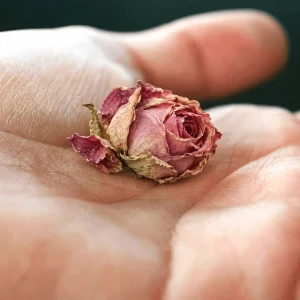
A hay-like or grassy smell can appear early in a normal dry, so one sniff does not prove failure. The concern is a finished product whose main aroma still feels grassy while the cultivar’s expected character remains muted. That can be associated with fast drying, insufficient curing time, poor storage, or a combination of factors.
For a deeper explanation, read Flavorwise’s guide to flower drying conditions and curing risks.
Brittle, Crumbly Texture
Flower that turns to dust with light handling may be overdried. A dry exterior can also hide more moisture inside, especially when dense flower loses surface water too aggressively. This imbalance makes the batch harder to judge and less predictable during storage.
Moisture content and water activity are not identical. Flavorwise’s water activity guide explains why a batch can feel dry outside while still behaving differently in a sealed environment.
Weak or Short-Lived Aroma
Terpenes are volatile. Heat, air exposure, time, and poor storage can all affect aroma. A weak smell does not always mean bad genetics; the post-harvest process may have reduced what the plant originally produced.
When a discount batch looks impressive but smells faint, treat that as useful information. The deal may still fit a budget purchase, but it should not be judged as premium flower simply because the original price tag was high.
Properly Cured Flower Checklist
There is no single visual test that proves a perfect cure. Use several signals together:
- License and traceability: The seller is licensed, and the package has readable batch information.
- Reasonable package date: Newer is not automatically better, but older stock deserves closer inspection.
- Clear aroma: The smell should be identifiable rather than dominated by hay, dust, or stale packaging.
- Balanced texture: The flower should not feel wet, spongy, powder-dry, or instantly crumbly.
- Even condition: Pieces from the same package should feel broadly similar rather than alternating between brittle and damp.
- Clean appearance: Avoid flower with suspicious fuzz, webbing, unusual dark patches, or off odors.
- Protected trichomes: Excessive crushing and shake can signal rough handling, old inventory, or fragile overdried flower.
Quality varies by cultivar, flower structure, trim style, and age. The goal is a clean, stable, aromatic product whose condition matches the price.
Can Homegrown Flower Be Better Than Dispensary Flower?
Yes, it can—but not automatically. Licensed dispensary flower offers convenience, required testing, traceability, and access to many cultivars. A skilled legal home grower gains control over harvest timing, trimming method, drying speed, curing duration, and storage conditions.
That control can create excellent flower. It can also create poor flower when the drying room runs hot, humidity swings, airflow hits one side too hard, or a large batch is crowded into a small space. Growing at home does not remove the need for quality control. It moves the responsibility to the grower.
California residents should check state and local cultivation rules before growing. Personal cultivation and commercial sale are different legal activities, and local restrictions may apply.
Why Serious Growers Control Post-Harvest
Experienced growers already know the painful part: a plant can look excellent on harvest day and still finish below expectations. Cultivation creates potential. Drying, curing, and storage decide how much of that potential remains.
The most important variables work together:
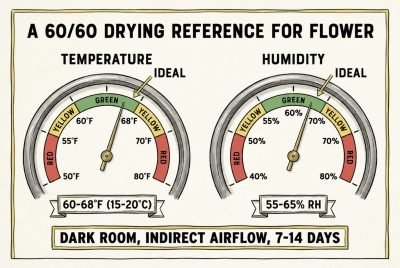
- Temperature influences drying speed and volatile aroma loss.
- Humidity affects how quickly moisture leaves the surface and center.
- Airflow should remove moisture without blasting one area directly.
- Space determines whether air can move around branches or trays evenly.
- Time allows moisture to move gradually and curing to continue.
This is the difference between buying quality and controlling quality. A shopper can inspect the result. A grower can influence the process from the moment the plant is cut.
Flavorwise’s guide to terpene preservation and slow curing explores why patience and environmental stability matter after harvest.
Protecting a 3–6 Plant Harvest
A three-to-six-plant harvest can be too valuable to leave to changing room conditions. It can also be too large for a compact tray system once branches, spacing, and airflow are considered. The answer is not to pack material more tightly. Crowding usually makes consistency harder.
A stronger workflow looks like this:
- Estimate the fresh load honestly. Plant count alone is not enough because branch size, density, and trim style change the required space.
- Choose hanging or tray drying before loading. Mixing very different material sizes can create uneven progress.
- Leave airflow paths open. More capacity does not mean filling every gap.
- Track temperature and humidity across the full cycle. One reading at noon does not show what happened overnight.
- Record the result. Note load size, time, aroma, texture, and storage behavior so the next batch improves.
The Flavorwise drying and curing cabinet is designed for growers who want a dedicated microclimate for drying, curing, and storage instead of controlling an entire room. Its larger cabinet format supports branch-hanging and tray workflows for serious small-batch harvests.
Protect Your Entire Harvest with Flavorwise
Months of cultivation can be changed by a few unstable post-harvest days. Explore a controlled cabinet built for growers who care about aroma, moisture balance, and repeatable results.
Frequently Asked Questions
Are Los Angeles dispensary deals worth it?
They can be. A worthwhile deal combines a fair final price with a licensed seller, readable package information, clean appearance, balanced moisture, and acceptable aroma. The discount percentage alone cannot tell you whether the flower is good value.
Why is discounted flower often dry?
Some discounted flower is older inventory that has lost moisture during storage, but not every discounted batch is dry. Promotions may also be tied to loyalty programs, first purchases, brand campaigns, or normal inventory rotation. Check the package date and evaluate the flower after opening.
How can you identify properly cured flower?
Look for a clean, distinct aroma; balanced texture; even condition across the package; intact structure; and no visible signs of contamination. Use those signals together with the package date, batch information, and retailer license.
Can homegrown flower be better than dispensary flower?
Yes. A skilled legal home grower can control harvest timing, drying, curing, and storage more closely than a large supply chain. The result depends on the grower’s process. Poor humidity, heat, crowding, or direct airflow can still reduce homegrown quality.
So, What Is the Best Deal?
The best Los Angeles dispensary deal is not necessarily the cheapest jar on the menu. It is the batch that gives you the right balance of price, freshness, aroma, texture, cleanliness, and traceability.
For shoppers, that means slowing down long enough to verify the seller and read the package. For serious home growers, it means recognizing that post-harvest quality is not luck. It comes from controlling temperature, humidity, airflow, space, and time from drying through storage.
For adults 21 and older where legal. This article is educational and does not provide legal, medical, or purchasing advice. Product-specific laws and local rules can change; verify current requirements with official California and City of Los Angeles sources.

Related posts
Slower Isn’t Always Better: What Really Matters When Drying Flowers
Flower drying is often reduced to one simple rule: hold the room at roughly 60°F and 60% relative humidity, then wait 10 to 14 days. T...
Read article
Denver industry event: What Serious Growers Can Learn From Winning Flower
The Denver industry event was never decided by genetics or THC percentage alone. A winning entry still had to impress judges through it...
Read article