
How to Properly Store Buds After Harvest To Maximize Flavor and Potency

Harvest is only the beginning of quality preservation.
For home growers and small-scale processors, post-harvest storage plays a decisive role in maintaining flavor, aromatic intensity, and overall potency. With the right conditions powered by Flavorwise controlled environments, you can preserve quality far longer than traditional open storage.
Even perfectly dried and cured flower buds can rapidly lose quality if storage conditions are poorly controlled. Oxidation, light exposure, moisture imbalance, and temperature fluctuations all accelerate degradation.
This guide explains how to properly store buds after harvest, using research-backed best practices to preserve flavor and chemical integrity for as long as possible — with insights from Flavorwise post-harvest expertise.
Why Proper Storage Matters After Harvest
Flower buds remain biologically active after harvest.
Residual enzymes, volatile aromatic compounds, and moisture gradients continue to evolve over time.
If storage conditions are inconsistent, growers may experience:
- Gradual loss of aroma and flavor
- Declining potency due to oxidation
- Texture changes (overdrying or moisture rebound)
- Uneven quality between batches
According to the American Herbal Pharmacopoeia, controlled moisture, oxygen exposure, and light management are essential components of post-harvest flower quality control — principles built into every Flavorwise storage solution.
Step 1: Ensure Buds Are Properly Dried and Cured First
Storage cannot correct mistakes made earlier. Before long-term storage, buds should:
- Have completed slow, uniform drying
- Be properly cured to stabilize internal moisture
- Reach a moisture equilibrium suitable for storage
Step 2: Control Oxygen Exposure
Oxygen is one of the primary drivers of post-harvest degradation.
Why Oxygen Matters
- Oxidation reduces aromatic compound intensity
- Potency declines over time with repeated air exchange
- Frequent opening of containers accelerates quality loss
Best Practices
- Use airtight or low-oxygen containers
- Minimize container opening frequency
- Avoid large headspace inside storage vessels
Reducing oxygen exposure slows oxidative reactions and preserves sensory quality — a key principle in Flavorwise post-harvest design.
Step 3: Maintain Stable Humidity Levels
Humidity imbalance is one of the most common storage mistakes.
Ideal Storage Humidity
- 58–62% relative humidity for cured flower buds
Why Humidity Control Is Critical
- Low humidity causes overdrying and aroma loss
- High humidity increases microbial risk
- Fluctuations create internal moisture migration
Uniform moisture stability is a foundational requirement for post-harvest botanical quality control (American Herbal Pharmacopoeia, 2014) — and a core feature of Flavorwise automated storage systems.
Step 4: Eliminate Light Exposure Completely
Light—especially UV—accelerates chemical degradation.
Effects of Light Exposure
- Breakdown of aromatic and active compounds
- Fading of visual appearance
- Accelerated loss of freshness
Best Practices
- Store buds in opaque or light-blocking containers
- Avoid clear glass exposed to ambient light
- Keep storage areas dark at all times
Light-free storage significantly improves long-term stability, just like in Flavorwise sealed, light-blocked storage chambers.
Step 5: Keep Temperature Cool and Consistent
Temperature fluctuations increase degradation rates.
Recommended Storage Temperature
- 15–21°C (59–70°F)
- Avoid heat sources and rapid temperature swings
Higher temperatures increase volatilization of aromatic compounds and speed up oxidation. Flavorwise systems maintain steady temperatures to protect terpene profiles.
Step 6: Minimize Handling and Re-Packaging
Every time buds are handled, quality is impacted.
Why Handling Matters
- Physical agitation damages delicate structures
- Repeated exposure to air and humidity
- Inconsistent conditions between portions
Best Practices
- Store in batch-sized containers
- Avoid frequent re-sorting or re-packing
- Design storage to reduce human intervention
Process repeatability — not manual adjustment — is key to consistent quality, which is why Flavorwise prioritizes set-it-and-forget-it environmental control.
Common Storage Mistakes to Avoid
- Using breathable or unsealed containers
- Storing in clear jars exposed to light
- Mixing batches with different moisture levels
- Opening containers repeatedly “to check”
- Storing near heat or fluctuating environments
Once degradation occurs, storage damage cannot be reversed. Protect your harvest with proper storage protocols and Flavorwise precision post-harvest equipment.
References
Bernstein, N., Gorelick, J., Zerahia, R. (2019).
Impact of drying and curing conditions on harvested flower quality.
Frontiers in Plant Science, 10:1136.
https://www.frontiersin.org/articles/10.3389/fpls.2019.01136
American Herbal Pharmacopoeia. (2014).
Flower Inflorescence: Standards of Identity, Analysis, and Quality Control.

Related posts

Terpene Preservation: The Magic of 28 Days Slow Curing
Terpene preservation is always a key concern while curing. For the dedicated cultivator, the harvest isn't the finish line—it's the beg...
Read article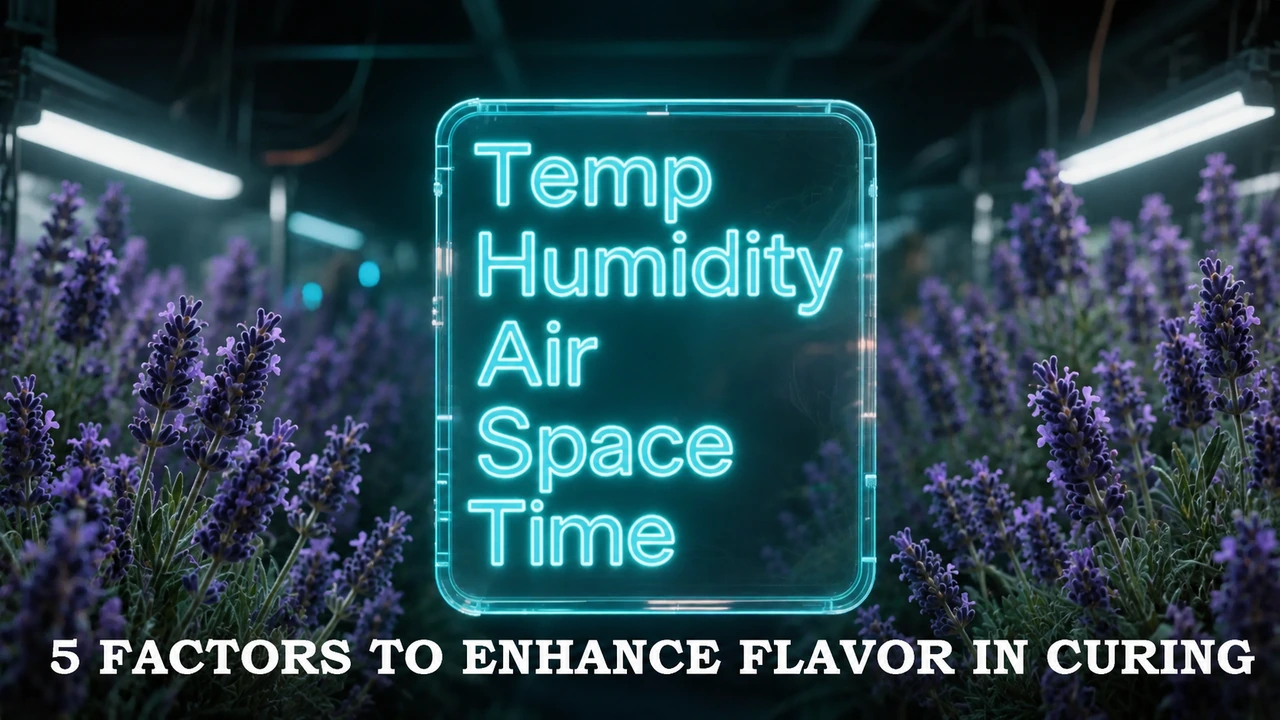
5 Key Factors That Enhance Flavor in Curing
First and foremost, we want to emphasize one core truth: every plant carries a unique, natural flavor. It is a one-of-a-kind gift from ...
Read article